
Chopin's Ballade No. 1 in G minor, Op. 23
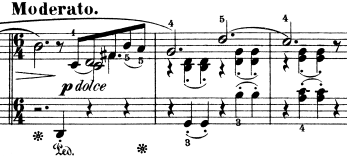
A storm in one hand that becomes a confession in one.

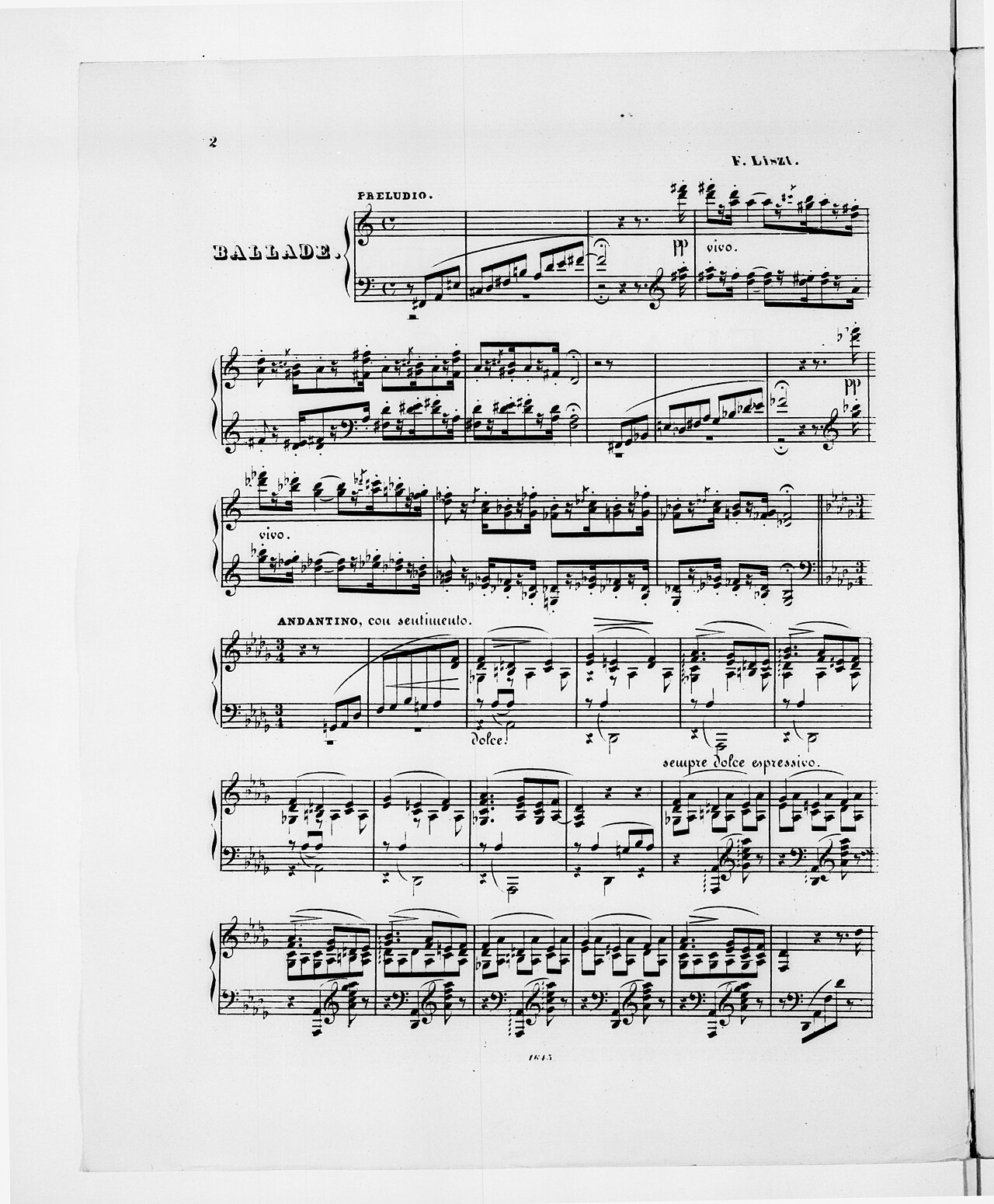
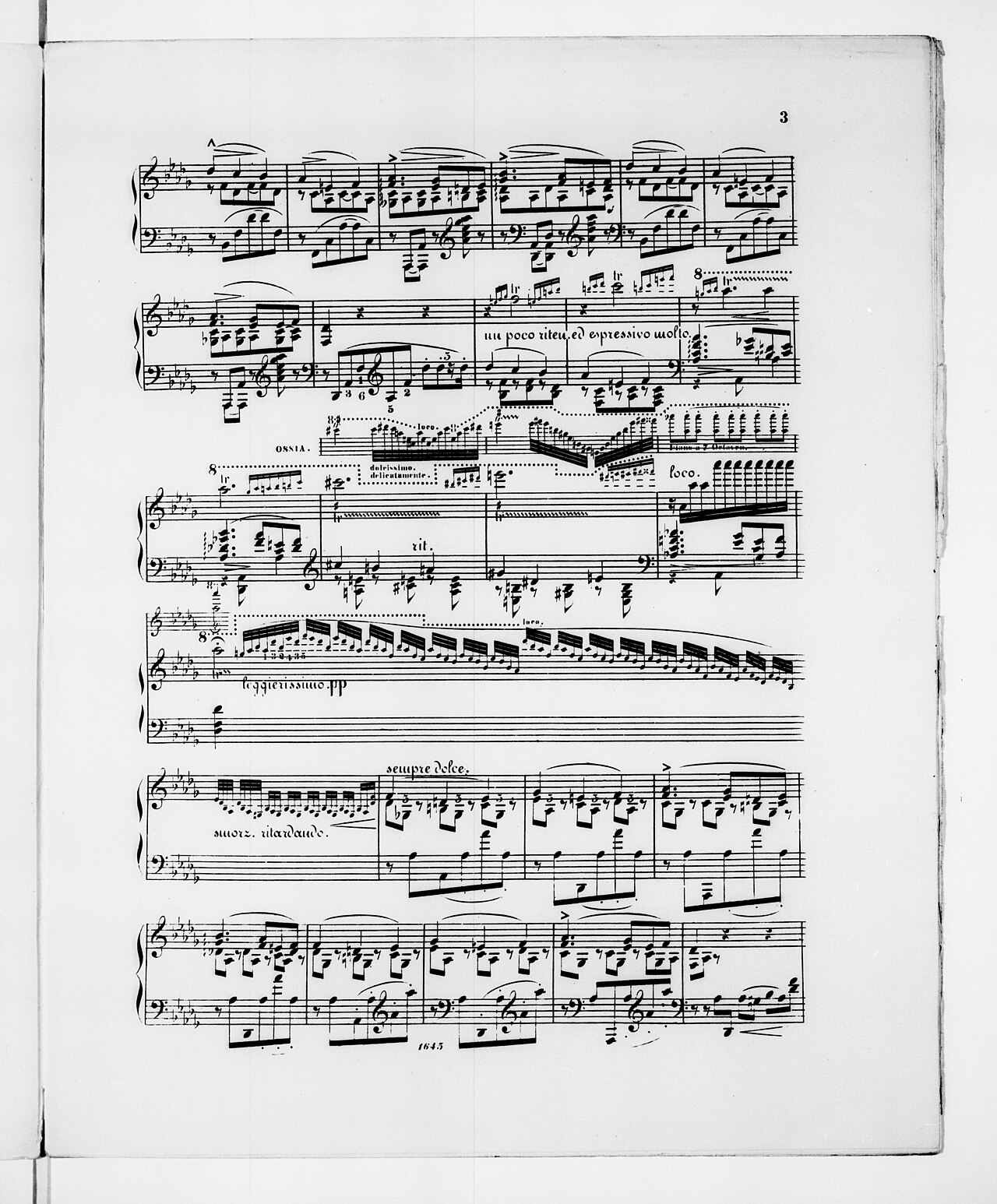
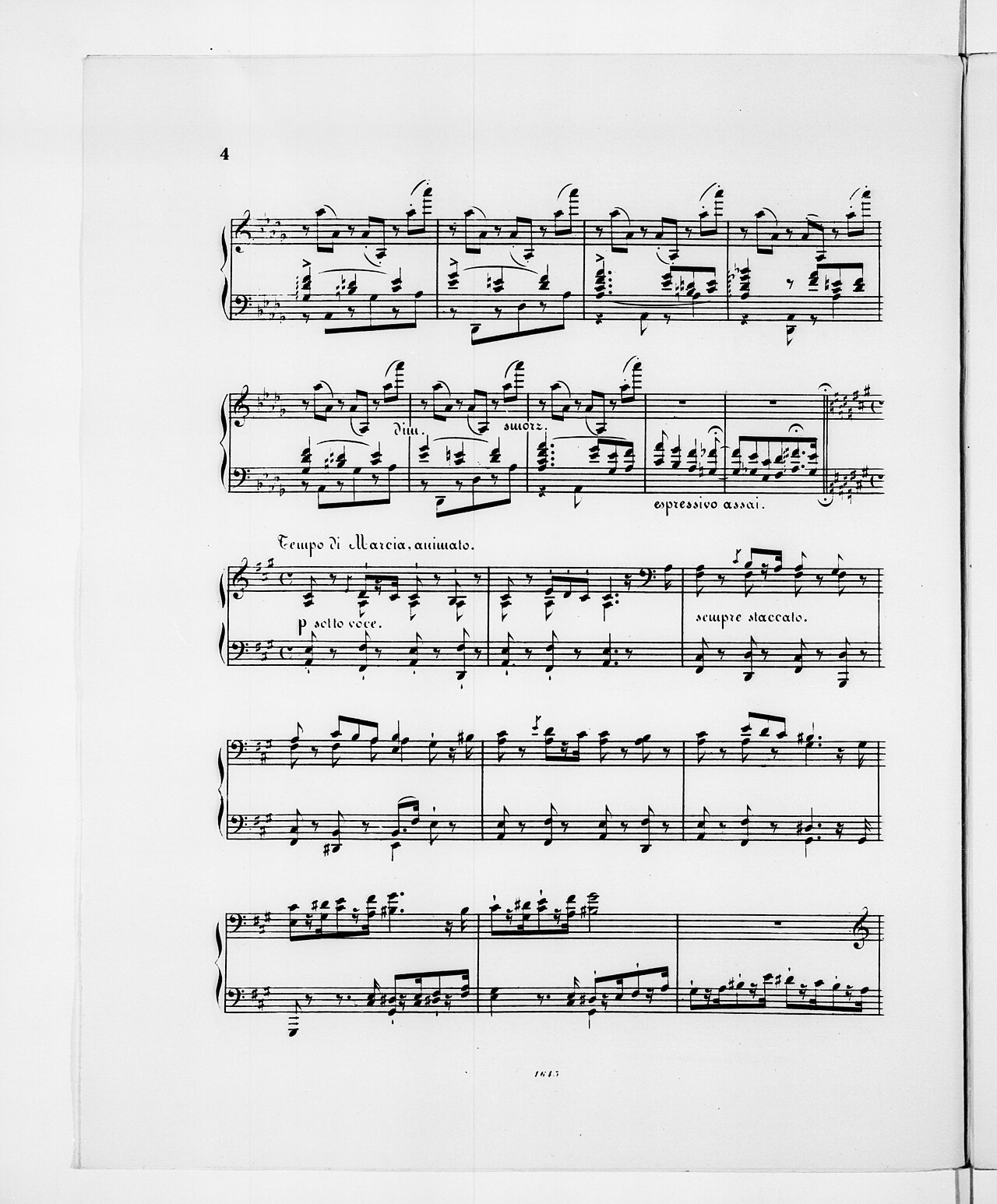
Liszt, Franz (1811-1886). Compositeur · Public domain
Chopin's Ballade No. 1 in G minor, Op. 23, is one of the most celebrated solo piano works in the Romantic repertoire, and in *Your Lie in April* it stands as a musical embodiment of Kousei Arima's inner world. The piece's sweeping narrative arc—from a tempestuous, almost violent opening through fragile lyrical interludes to a blazing, defiant conclusion—mirrors the trajectory of a young prodigy who has lost his ability to hear music and must find his way back to feeling it. In the story, the Ballade is not merely a recital obligation; it is the sound of Kousei's grief, his mechanical perfection, and ultimately his liberation. When Kaori Miyazono's unexpected violin playing shatters his rigid, note-perfect approach, the Ballade becomes the vessel through which he learns that music is not a score to be executed but a story to be lived. The piece anchors some of the most emotionally charged performance moments in the series and remains a touchstone for fans who associate the thunder of its opening with the turning of Kousei's heart.
- Composer
- Frédéric Chopin
- Key
- G minor
- Opus
- 23
- Form
- Single-movement ballade (narrative structure)
- Instrument
- Solo piano
- Associated character
- Kousei Arima
- Role in story
- Signature recital piece reflecting Kousei's emotional journey
Lore & Background
The Ballade No. 1 in G minor occupies a singular place in Chopin's output and in the world of *Your Lie in April*. Structurally, it is a continuous single movement that unfolds like a short story: a driving, chromatic opening that feels like a storm breaking over a landscape, followed by a tender, almost aching first theme in B-flat major, a second theme of quiet yearning, a turbulent development, and a coda that surges upward with a fierce, almost reckless triumph. This narrative shape—destruction, tenderness, struggle, defiance—resonates deeply with Kousei's own arc, a boy who has been through the loss of his mother, the silence of his own piano, and the slow, painful return of color to a grayscale world. In the anime's musical language, the Ballade is the piece that Kousei plays with the most visible tension. Before Kaori's influence, his interpretation is technically immaculate but emotionally sealed—every note placed with surgical precision, the storm rendered as a controlled exercise rather than a lived experience. The audience hears perfection; they do not hear a person. After Kaori's death and the aftermath, the same notes carry weight, breath, and the faintest tremor of a boy who has learned to let the music be ugly and beautiful at once. The Ballade becomes the sound of a prodigy becoming a musician. For the ensemble around him—Kaori Miyazono on violin, Ryota Watari on piano, and the memory of Kaori's own playing—the Ballade also functions as a shared emotional reference point. It is the piece that reminds Kousei he is not performing in a vacuum, that the music he makes is heard by people who love him, and that the final triumphant chords are not a solo declaration but a promise made to the living and the absent alike.
In Their Own Story
The recital hall is empty except for the dust motes turning in a single shaft of late-afternoon light. Kousei sits at the grand piano, his fingers resting on the keys without pressing them. The Ballade is written on the stand, but he is not reading it. He is listening to the silence between the notes—the silence his mother used to fill with humming, the silence Kaori used to fill with a violin line that was wrong by a quarter-tone and right by a universe. He presses G. Then B-flat. Then the storm. The first four chords hit the air like a fist through a window, and for a moment the hall is not a hall but the rooftop where he used to practice until his mother told him to stop, until the day she didn't. His hands move. They are not his hands. They are the hands of a boy who has decided, at last, to let the music be afraid.
Reader's Guide
Kousei Arima takes the stage for a recital that is, on paper, a routine obligation: a Chopin ballade, expected of a prodigy who has played the composer since childhood. The stakes are not the applause. The stakes are whether he can make the storm in the opening bars feel like something that happened to him rather than something he is demonstrating. Technically, the Ballade demands a wide register, rapid chromatic passages, and a pianissimo that must still carry the room. Kousei's left hand drives the tempest; his right hand must float above it. The first lyrical theme in B-flat major is the piece's emotional spine—tender, slightly off-balance, as if the melody is remembering something it cannot quite name. The development section strips the themes apart and reassembles them in conflict. The coda is a sprint: chords stacked with increasing ferocity, the tempo pushing past comfortable, the final G minor chord landing like a door slamming shut. What makes this performance a turning point is not the difficulty but the vulnerability. Kousei has always played Chopin as a closed system—every dynamic marked, every rubato calculated. Here, in the second lyrical theme, his tempo wavers. Not a mistake. A breath. The audience hears a boy, not a machine. The final chord is not triumphant in the way a competition judges expect; it is defiant, almost angry, as if he is telling the silence that it does not get the last word. It lingers because it is the moment the audience stops hearing a recital and starts hearing a life.
Did You Know?
- The Ballade No. 1 in G minor is the most frequently performed of Chopin's four ballades, and its single-movement narrative structure—storm, lyric, struggle, triumph—makes it a natural fit for a character-driven story lik
- In the anime, Kousei's relationship with Chopin is so central that the composer's music becomes a mirror for his emotional state, with the Ballade's opening chromatic run—not a series of four chords—symbolizing the chaos
Gallery


Frequently Asked Questions
What role does Chopin's Ballade No. 1 in G minor play in Your Lie in April?
It functions as the audible expression of Kousei Arima's inner world, tracing his arc from a broken prodigy who can no longer hear music to someone who must rediscover genuine feeling at the keyboard. The work's dramatic sweep—from fierce, almost violent passages through tender lyrical moments to a blazing, defiant close—mirrors his emotional journey across the series.
Which character is Chopin's Ballade No. 1 in G minor most closely tied to?
Kousei Arima is the pianist the Ballade belongs to in the story, representing both his flawless technique and his emotional paralysis after his breakdown. Rather than serving as a simple recital obligation, the piece acts as the sound of his grief and his mechanical detachment from music.
What are the basic musical facts about the Ballade No. 1 in G minor as featured in the series?
It is a single-movement narrative ballade for solo piano in G minor, Opus 23, composed by Frédéric Chopin. In the anime's depiction its structure moves from a stormy, aggressive opening through fragile songlike interludes to a blazing conclusion, paralleling Kousei's own trajectory.
Why is the Ballade No. 1 in G minor important to Kousei's character development?
The piece embodies the central tension of his story: the gap between flawless technical execution and the absence of genuine musical feeling. As he reconnects with emotion—sparked largely by Kaori Miyazono's influence—the Ballade transforms from a performance of grief into a raw, one-handed confession.
What sets Chopin's Ballade No. 1 in G minor apart from the other piano works in Your Lie in April?
Where other pieces in the series highlight specific moments of connection or rivalry, the Ballade encapsulates Kousei's entire emotional arc within a single performance. Its narrative shape—essentially a storm in four hands that resolves into a solitary confession—makes it the most personally defining work for the protagonist.
More in Music & Performances
Elsewhere in the Your Lie in April universe
Spotted an error? Know more?
This is a living reference — every entry is fact-audited, and reader corrections feed straight into our audit queue. Suggest an edit · See this site's audit record